
Sekumpul Photography and Drone
Best Photo & Drone Spots at Sekumpul Waterfall: A Local Guide’s Tips
Key Takeaways (Quick Summary)
- The base plunge pool viewpoint offers the classic straight-on shot of the 80-meter twin cascades, best photographed between 7:30–9:00 AM.
- Drone flights at Sekumpul should always go through a local operator familiar with the canyon's wind patterns and any local/community flight rules.
- The ridge viewpoint above the falls is the strongest spot for aerial and panoramic drone shots of the full canyon.
- Flowing-dress portraits work best paired with a dedicated ground photographer, since a solo phone shot rarely does the canyon depth justice.
- Golden-hour light through the jungle canopy only lasts about 30-45 minutes, so timing your shoot with your guide matters as much as gear choice.
Daftar Isi
- Best Photo and Drone Spots at Sekumpul
- Why Sekumpul Is a Photographer’s Favorite in Bali
- Shooting the Falls: Three Spots Worth the Climb
- Best Time of Day and Light Conditions
- Drone Photography: Fly Smart, Fly Local
- Flowing Dress & Portrait Photography
- Smartphone vs. Dedicated Camera
- Practical Gear Notes
- Camera Settings That Work Well Here
- Video and Reels Tips
- A Quick Pre-Shoot Checklist
- Common Photography Mistakes to Avoid
- Who Handles Your Photo or Drone Session
- Ready to Book Your Session?
- Plan Your Shoot
Best Photo and Drone Spots at Sekumpul
Looking for the best photo drone spots along the trek? These are the exact viewpoints our guides recommend.
Why Sekumpul Is a Photographer’s Favorite in Bali
As someone who has flown a drone and carried a camera down this canyon more times than I can count, I can tell you Sekumpul rewards photographers in a way few other Bali locations do — the combination of scale, mist, and jungle framing is genuinely hard to replicate. This guide covers exactly where to shoot, when to go, and what gear decisions actually matter, based on what we tell our own photography guests before every session.
Whether you are a serious hobbyist carrying a full camera bag or simply want the best possible shots from your phone, the fundamentals below apply either way — it is timing and positioning that make the biggest difference here, more than any single piece of gear.
Shooting the Falls: Three Spots Worth the Climb
Sekumpul rewards photographers who are willing to move around the canyon rather than shoot from a single spot — a common mistake is stopping at the first viewpoint and missing two genuinely different compositions further along. Our guides walk this trail daily and consistently point travelers to the same three vantage points:
The Base Plunge Pool
The classic, straight-on view of the 80-meter twin cascades. Wide-angle lenses work well here, and a polarizing filter cuts glare off the spray. This is the shot most visitors come specifically to capture, and the one that appears most often in trip reports and social posts about Sekumpul.
The Mid-Canyon Ledge
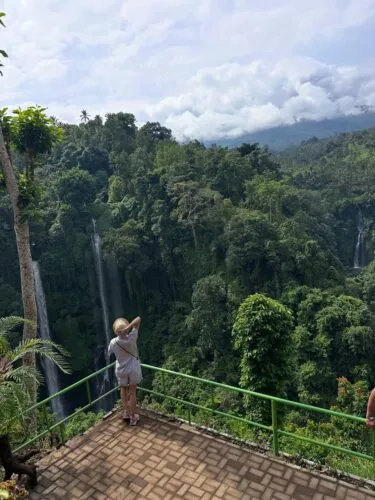
A side-angle view that captures the scale of the canyon walls alongside the falls — a favorite for portraits with the waterfall in the background, since it shows both the person and the full drop of water in one frame.
The Upper Ridge Viewpoint
A panoramic lookout over the whole valley, and the strongest launch point for drone footage of the full cascade system. This spot alone is worth the extra climb if aerial photography is your priority.
Best Time of Day and Light Conditions
Morning light between 7:30 and 9:00 AM is consistently the best window — the sun angles low through the canyon mist, creating visible light rays over the falls that disappear once the sun climbs higher. This same window also means fewer other visitors in your shots, since day-trip groups from south Bali typically arrive after 11:00 AM.
Shooting in Wet vs. Dry Season
Dry season (April-October) offers clearer skies and more predictable light, but slightly less dramatic water volume. Wet season (November-March) brings a much more powerful, thunderous waterfall with vivid rainforest greens, though morning mist can occasionally delay the best light by 20-30 minutes.
Drone Photography: Fly Smart, Fly Local
Sekumpul’s canyon creates its own wind patterns — gusts can funnel unpredictably between the cliff walls, and battery life drops faster at altitude than most pilots expect. Rather than flying solo, most visitors get far better (and safer) results booking our Flying Dress Rental & Drone Photography package, where a licensed local pilot who flies this specific canyon regularly handles launch, positioning, and safety calls in real time.
Beyond safety, a local pilot also knows the shots that actually work here: wide establishing shots from the ridge, a slow reveal descending into the canyon, and close orbits around the plunge pool that a first-time visitor would not know to ask for. For the full rules and safety picture, read our drone rules and safety guide.
Flowing Dress & Portrait Photography
The vivid flowing-dress photos you may have seen from Sekumpul are a two-person job: a ground photographer working the base viewpoint while an assistant manages the dress train against the wind and spray. Bright solid colors (red, yellow, emerald) read best against the green canyon walls, and the most dramatic shots are taken standing in the shallow edge of the plunge pool itself, angled so the 80-meter drop fills the background. See our full flying dress session guide for a complete walkthrough of what the day looks like.
Smartphone vs. Dedicated Camera
A modern smartphone genuinely handles Sekumpul well, particularly with an ultra-wide lens setting for the base plunge-pool shot. Where a dedicated camera pulls ahead is zoom compression for the mid-canyon ledge shot, and low-light performance during the earliest morning window when mist is still thick. If you are choosing between the two and can only bring one, prioritize whichever device you are most comfortable operating quickly — moments here (light rays through mist, a break in the spray) come and go fast.
Practical Gear Notes
Mist from the falls is constant near the base — a microfiber cloth and a dry bag are essential for any camera gear, phone or otherwise. If you are shooting on a phone, wiping the lens right before each shot makes a bigger difference here than almost anywhere else in Bali. A spare battery or power bank is worth carrying too, since cold storage and constant shooting both drain batteries faster in the humid canyon air.
Camera Settings That Work Well Here
For the base plunge-pool shot, a slightly faster shutter speed (1/500s or quicker) freezes individual spray droplets for a crisper image, while a slower shutter (1/15s or slower, tripod recommended) turns the falling water into the smooth, silky effect popular in waterfall photography. For portraits with the falls in the background, an aperture around f/4-f/5.6 keeps both subject and waterfall reasonably sharp without losing the background entirely to blur.
Video and Reels Tips
Many guests now shoot as much video as stills, particularly for social media reels. A slow walking shot descending the final staircase toward the base viewpoint consistently performs well as an opening or closing clip, and pairing a static wide shot of the falls with a closer handheld clip of the plunge pool gives useful variety for editing later. If you are booking our dedicated photo and video service, mention in advance whether reels-style vertical video is a priority so your photographer can plan shot composition accordingly.
Stabilization Matters More Than You Expect
The stone steps and uneven ground near the base make handheld video noticeably shakier than most people expect. A small gimbal or even a phone case with basic stabilization noticeably improves footage quality, and many guests find that simply slowing their walking pace while filming makes the biggest single difference of all.
A Quick Pre-Shoot Checklist
- Charged batteries and at least one spare, for both camera and drone if applicable
- Microfiber cloth and a waterproof dry bag
- Confirmed start time with your guide to catch the 7:30-9:00 AM light window
- Outfit colors chosen in advance if doing a flowing-dress or portrait session
Common Photography Mistakes to Avoid
- Shooting only from the base. The mid-canyon ledge and ridge viewpoint both offer meaningfully different compositions — do not stop at the first spot.
- Ignoring lens fog and spray. A few seconds of wiping your lens before each shot prevents an entire session of soft, hazy images.
- Arriving too late for the light. By 10:00 AM, the dramatic low-angle light rays through the mist are largely gone for the day.
- Flying a drone without local knowledge. Canyon wind gusts catch unprepared pilots off guard more often than any other Bali location we know of.
Who Handles Your Photo or Drone Session
Our photography and drone team is made up of Sekumpul locals who fly and shoot this specific canyon on a near-daily basis, not visiting photographers hired for the season. That means real, current knowledge of wind conditions, light timing, and the exact vantage points that consistently produce the strongest shots — knowledge that simply cannot be replicated by a generic photographer visiting once. It also means faster turnaround on edited files, since your photographer already knows exactly which shots from the day are worth prioritizing.
Ready to Book Your Session?
Whether you want a dedicated drone flight, a flowing-dress portrait session, or simply want your private guide to take a few great phone photos along the way, message us on WhatsApp with your travel dates and preferred style. We will match you with the right package and the best timing for the light conditions on your specific day.
Plan Your Shoot
- Flying Dress Photography at Sekumpul: What to Expect — the full session walkthrough.
- Drone Rules & Safety at Sekumpul — what every pilot should know before flying.
For broader context on the region, see this overview of Buleleng Regency.
Frequently Asked Questions
Do I need a permit to fly a drone at Sekumpul Waterfall?
Village and national park rules can change, and airspace near canyons carries real safety considerations. We recommend always flying through our licensed local drone pilot, who stays current on the latest requirements and knows safe launch/landing spots.
What is the single best time of day for waterfall photos?
Between 7:30 and 9:00 AM. Morning sun angles low through the canyon mist, creating visible light rays over the falls, and you will usually have the plunge pool to yourself before the first day-trip groups arrive.
Is a professional camera necessary, or is a phone good enough?
A modern smartphone captures excellent results at Sekumpul, especially with a wide-angle or ultra-wide lens setting. A dedicated camera helps most with zoom compression on the mid-canyon shots and low-light performance in the early morning mist.
Can I bring my own drone instead of booking a pilot?
You technically can, but most visitors get better results and fewer complications booking through our licensed local pilot, who already knows this specific canyon's wind behavior and safe launch points.
Ready to Experience Sekumpul with Local Guides?
Book a private trekking tour with villagers who know every trail and secret waterfall spot.
Book Your Trek Now