
Sekumpul Village Culture
Inside a Sekumpul Family Compound: Canang Making, Coffee & Village Life
Key Takeaways (Quick Summary)
- Sekumpul Village sits in the Sawan highlands, where families farm cloves, coffee, and cocoa alongside guiding trekkers to the falls.
- Canang sari (daily floral offerings) are handwoven every morning from young coconut leaf and flowers as a Balinese Hindu expression of gratitude.
- Visiting a family compound gives travelers a grounded, unscripted look at village life that a waterfall trek alone does not show.
- Cultural visits directly support the same local families who work as your trekking guides.
- The full canang-making session typically takes 1.5-2 hours, including time in the family garden and a temple offering walk.
Daftar Isi
Life Inside a Sekumpul Family Compound
Stepping into a sekumpul family compound offers a rare, intimate look at how daily life unfolds in this North Bali village.
A Village Built Around the Waterfall — and Around Each Other
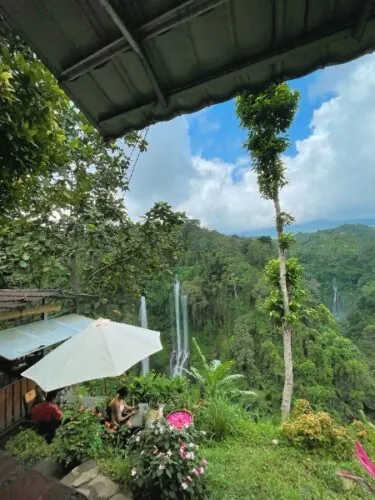
Most visitors come to Sekumpul for the waterfall and leave without ever setting foot inside the village itself. But the trails, the guides, and the falls are only one half of what makes this corner of North Bali special. Sekumpul is first and foremost a farming community — clove trees, coffee shrubs, and cocoa pods grow along nearly every path, tended by the same families who lead treks down into the canyon each morning.
Spend an afternoon in a family compound and the pace changes completely. Instead of stone stairs and river crossings, you sit in an open bale pavilion, listen to the sound of a nearby stream, and watch a grandmother fold coconut leaf into a canang basket with hands that have done it every single day for decades.
Canang Sari: A Daily Offering, Not a Performance
In Bali, canang sari are small woven trays of palm leaf topped with flowers, rice, and incense, placed at doorways, shrines, and temples as a daily expression of gratitude. They are not made for tourists — they are made every single morning, rain or shine, as an ordinary part of Hindu-Balinese life.
How It’s Made
- The Weave: Young coconut leaf (janur) is folded and pinned into a small square tray using nothing but a sliver of bamboo as a pin.
- The Colors: White, red, yellow, and blue/green petals are placed in the cardinal directions, each representing a different aspect of Balinese Hindu cosmology.
- The Offering: A lit stick of incense completes the canang before it is placed at a shrine or doorstep.
What the Session Actually Looks Like
Guests sit alongside a host — often a grandmother or aunt in the family — who demonstrates the fold step by step before letting you try your own. It typically takes a few attempts before the leaf holds its shape properly, and hosts are patient and genuinely happy to correct and re-teach as many times as needed. Once your canang is finished, you walk together to the family temple to place it, with your host explaining its meaning along the way. Many guests describe this quiet, unhurried pace as the most memorable part of their entire Bali trip — a sharp contrast to the more physically demanding waterfall trek.
Clove, Coffee, and the Rhythm of a Mountain Village
Sawan sits high enough in the hills that the air stays cool year-round — ideal growing conditions for cloves (used in Indonesia’s famous kretek cigarettes), Robusta coffee, and cocoa. Walking through a family’s smallholding, you will often see clove flowers laid out to dry on woven mats in the sun, and hear the story of how a harvest season shapes the village calendar as much as the tourist season does.
A Short Garden Walk
Most compound visits include a brief walk through the family’s own garden plot, where your host points out clove trees, coffee shrubs, and cocoa pods at various stages of growth. Depending on the season, you may get to taste freshly picked fruit or a cup of coffee brewed from beans grown just meters away.
Meeting the Family Behind Your Guide
Many of our waterfall guides are related to, or grew up alongside, the families who host these cultural visits — which means the connection between your trek and your cultural experience is not a coincidence. Booking both together gives you a genuinely fuller picture of Sekumpul than the waterfall alone can offer, and it means your visit supports more households across the village rather than a single guide or family.
Bring This Experience Home
Most guests are surprised by how much they remember from the canang session compared to the waterfall itself — the specific fold, the smell of incense, a shared laugh over a mis-folded leaf. If you would like to combine this with your waterfall trek, ask us about a full-day itinerary that includes both, or book the canang-making experience directly through our packages page.
Whichever way you choose to experience it, this small, everyday ritual says more about daily life in Sekumpul than almost anything else we could show you — and it costs nothing extra to add a genuine human connection to a trip that might otherwise be just photographs of a waterfall.
This is the context our guides carry with them on every waterfall trek — the trail to Sekumpul does not exist apart from the village around it, and neither should your visit. For the fuller picture of village life beyond one family’s compound, see our North Bali Village Culture Guide.
To learn more about the broader customs and traditions referenced here, see this overview of Balinese culture.
Frequently Asked Questions
Can I visit a Sekumpul family home without doing the waterfall trek?
Yes. The canang-making and village culture experience can be booked on its own or combined with any waterfall package — ask us on WhatsApp for a custom itinerary.
Is it respectful for a visitor to take part in canang making?
Absolutely — Balinese families are generally happy to teach visitors who show genuine interest and respect for the tradition. Modest dress is appreciated when the offering is brought to the family temple.
How long does a family compound visit take?
A typical session runs 1.5-2 hours, including the canang-weaving lesson, a short garden walk to see clove and coffee plants, and time to place the finished offering at the family shrine.
Can children take part in the canang-making experience?
Yes — children often enjoy it even more than adults, since the leaf-folding is a bit like origami and the garden walk gives them something hands-on and outdoors to do.
Ready to Experience Sekumpul with Local Guides?
Book a private trekking tour with villagers who know every trail and secret waterfall spot.
Book Your Trek Now