
Sekumpul Village Culture
North Bali Village Culture Guide: Sekumpul, Sawan & Balinese Traditions
Key Takeaways (Quick Summary)
- Sekumpul and the wider Sawan district are farming communities first, waterfall-tourism hosts second — clove, coffee, and cocoa still shape daily life.
- Canang sari offerings are made fresh every morning as a Hindu-Balinese expression of gratitude, not a tourist demonstration.
- Modest dress and quiet respect are expected near family temples and shrines, even outside formal ceremony days.
- Tourism revenue from guided treks flows directly to Sekumpul families, funding trail maintenance and community projects.
- The Balinese calendar's temple ceremonies (odalan) still shape the village rhythm far more than the tourist season does.
Daftar Isi
- A Closer Look at North Bali Village Culture
- A Farming Village Before It Was a Waterfall Destination
- Canang Sari: The Daily Offering
- Temple Etiquette for Visitors
- The Farming Economy: Clove, Coffee, and Cocoa
- Subak Irrigation & the Rhythm of the Land
- Temple Ceremonies and the Balinese Calendar
- How Your Visit Supports the Village
- A Day in the Life of a Sekumpul Family Compound
- Language and Everyday Balinese Phrases
- Where the Name “Sekumpul” Comes From
- Respecting the Land Beyond Temple Etiquette
- Bringing It All Together on Your Visit
A Closer Look at North Bali Village Culture
Beyond the waterfall itself, this north bali village culture guide introduces the Sawan-area traditions our guests get to experience along the way.
A Farming Village Before It Was a Waterfall Destination
Long before Sekumpul appeared on any traveler’s itinerary, it was — and still is — a farming village in the Sawan highlands of Buleleng Regency. Clove trees, coffee shrubs, and cocoa pods line nearly every trail, tended by the same families who now guide visitors down into the canyon. Understanding this order of priorities changes how a visit feels: you are a guest in a working village, not a customer at an attraction built for you.
This guide goes beyond the waterfall itself to cover the culture, customs, and daily rhythms that shape life here — written by our own team of Sekumpul-born guides and cultural hosts, not an outside observer.
Canang Sari: The Daily Offering
Every morning across Bali, small woven trays of palm leaf, flowers, rice, and incense — canang sari — appear at doorways, shrines, and temple steps. In Sekumpul, this ritual continues exactly as it has for generations, offered as a daily expression of gratitude rather than staged for visitors.
The Meaning Behind the Colors
Each canang follows a symbolic pattern: white petals face east, red face south, yellow face west, and green or blue face north — representing the cardinal directions and their associated deities in Balinese Hindu cosmology. A lit stick of incense completes the offering, its rising smoke understood as a message carried upward. Our family compound experience lets travelers learn the weave and symbolism firsthand from a local host.
Temple Etiquette for Visitors
Family and village temples are active places of worship, not photo backdrops. A few guidelines make a real difference:
- Cover shoulders and knees; a sarong is usually provided if you don’t have one.
- Avoid stepping directly in front of anyone praying or making an offering.
- Ask before photographing a shrine or a family member at prayer — most are happy to say yes if asked respectfully.
- Menstruating visitors are traditionally asked not to enter inner temple areas — your guide can explain more if relevant.
Why These Customs Matter
These are not arbitrary tourist rules — they reflect a living belief system that governs daily life here, not a performance staged for outside visitors. Guests who take a few minutes to understand the reasoning behind each guideline consistently report a warmer, more genuine welcome from the families they meet.
The Farming Economy: Clove, Coffee, and Cocoa
Sawan’s elevation and cool, misty climate make it ideal growing conditions for three crops that shape the region’s economy and calendar alike.
Cloves
Cloves — used in Indonesia’s famous kretek cigarettes — are harvested by hand and laid out to dry on woven mats in the sun, a common sight along village paths during harvest season. The clove harvest historically shapes the village’s work calendar as much as, or more than, the tourist season does.
Robusta Coffee
Coffee shrubs grow in the shade of taller trees throughout the highlands. Many family compounds still process their own beans using traditional methods, and a cultural visit often includes a chance to taste freshly brewed Robusta coffee grown just steps from where you are sitting.
Cocoa
Cocoa pods, less commonly known to visitors than cloves or coffee, also grow throughout Sekumpul’s smallholdings, adding a third layer to the local farming economy that supports village families year-round, independent of tourism.
Subak Irrigation & the Rhythm of the Land
The rice terraces you pass on the way to the falls are fed by subak, Bali’s centuries-old cooperative irrigation system, recognized by UNESCO for the way it blends engineering with Hindu-Balinese philosophy. Water is shared communally between farms according to a schedule managed by the subak association, not bought and sold individually — a cooperative model that still governs how Sekumpul’s hillside terraces function today, and one your guide can explain in more detail as you pass through the terraces.
Temple Ceremonies and the Balinese Calendar
Balinese Hindu ceremonies follow the 210-day pawukon calendar rather than fixed annual dates, meaning temple anniversaries (odalan) rotate throughout the year. If your visit happens to coincide with a ceremony, you may see families dressed in ceremonial white and gold, elaborate offering towers, and gamelan music — a genuine, unplanned glimpse into village life rather than something arranged for visitors. Your guide will always explain appropriate ways to observe respectfully if this happens during your trek.
How Your Visit Supports the Village
Every guided trek is led by a Sekumpul local, and village entrance fees are reinvested directly into trail maintenance and community projects rather than passed to an outside operator. Booking a cultural add-on — canang making, a family lunch, a temple visit — extends that same direct support to more households in the village, beyond just the guides who work the trail directly.
A Day in the Life of a Sekumpul Family Compound
Balinese family compounds are typically home to multiple generations living within one walled property, organized around a shared family temple. Mornings begin early — often before sunrise — with the day’s first canang offerings, followed by farm work in the clove or coffee plots, meal preparation, and for many families, guiding duties on the waterfall trail. Understanding this daily rhythm helps explain why guides move through the trek with such practiced ease: it is simply part of an ordinary working day, layered on top of farming and family responsibilities that have nothing to do with tourism.
Visiting a Family Compound as a Guest
When you join a cultural add-on like our canang-making or family lunch experience, you are welcomed into this same rhythm rather than a staged replica of it. Removing shoes before entering a pavilion, accepting food or drink with your right hand, and speaking a bit more quietly than you might elsewhere are all small gestures of respect that Balinese hosts notice and appreciate, even without being asked.
Language and Everyday Balinese Phrases
Most guides speak conversational English fluently, but guests often enjoy picking up a few words of Balinese or Indonesian during the trek. “Suksma” (thank you, in Balinese) and “terima kasih” (thank you, in Indonesian) are both warmly received. Villagers commonly switch between Balinese at home and Indonesian in more formal or mixed settings — a small window into the layered identity of daily life here.
Where the Name “Sekumpul” Comes From
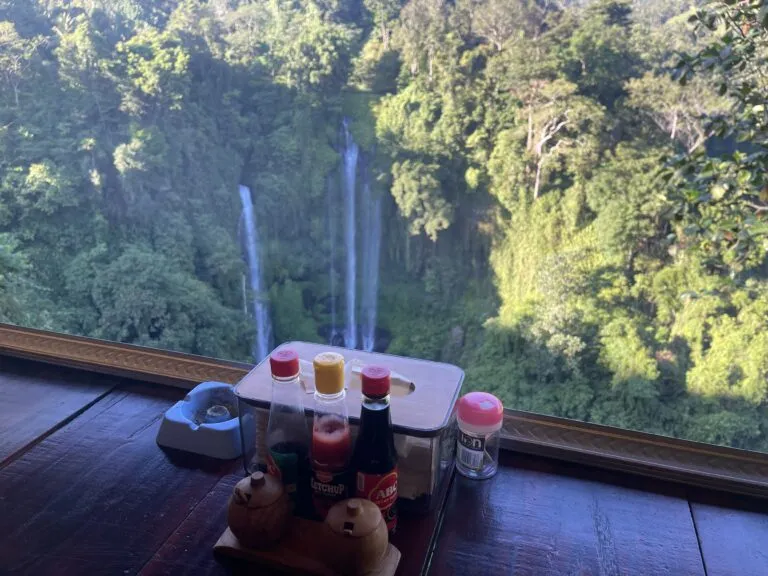
Sekumpul means roughly “a gathering” or “clustered together” in Balinese — a direct reference to how the waterfall’s seven cascades gather in a single canyon. The name reflects a broader pattern in how villages here name places after what the land itself does, rather than after historical figures or events. Understanding this small piece of etymology is a reminder that the waterfall and the village share the same name for a reason: they have always been understood as one place, not a natural attraction separate from the community around it.
Respecting the Land Beyond Temple Etiquette
Cultural respect at Sekumpul extends beyond temples to the land itself. Farmers here have worked these hillsides for generations, and simple courtesies — staying on marked trails through active farmland, not picking fruit or flowers without asking, and packing out any trash — are taken seriously as an extension of the same respect shown at a family shrine. Guides mention this early in every trek, not as a rule imposed on visitors, but as an invitation to treat the land the way the village itself does.
Bringing It All Together on Your Visit
The waterfall may be what brings you to Sekumpul, but the village itself is what most guests remember afterward — the smell of drying cloves, a shared cup of coffee grown meters from where you sit, or a quiet moment watching someone fold a canang without a second thought. If you want to build a fuller cultural experience into your trip, ask us about combining a waterfall trek with a canang-making session or a family-hosted lunch. Many guests tell us this side of the visit — not the stairs, not even the waterfall itself — ends up being what they talk about most once they are back home.
If you are planning your visit and want to weave cultural experiences into a waterfall trek, message our team on WhatsApp with your travel dates. We can build an itinerary that balances trekking time with village life at whatever pace suits your group.
To learn more about the broader customs and traditions referenced here, see this overview of Balinese culture.
Frequently Asked Questions
Is Sekumpul Village open to visitors outside of the waterfall trek?
Yes — cultural experiences like canang-making and family compound visits can be booked separately or combined with a trek. Ask us for a custom itinerary.
What should I wear when visiting a family temple in Sekumpul?
Modest clothing covering shoulders and knees is appreciated; a sarong is typically provided as part of any cultural or temple-visit package.
What is grown in Sekumpul Village, and can visitors see it?
Cloves, Robusta coffee, and cocoa are the three main crops. Family compound visits often include a short walk through an active smallholding where you can see (and sometimes taste) all three.
Are there festivals or ceremonies visitors might see during a trip?
Possibly — temple ceremonies (odalan) happen on a rotating schedule tied to the 210-day Balinese calendar, not fixed dates. If one falls during your visit, your guide can explain the appropriate way to observe respectfully.
Ready to Experience Sekumpul with Local Guides?
Book a private trekking tour with villagers who know every trail and secret waterfall spot.
Book Your Trek Now